Llega a tu destino pasando por las mejores paradas del camino.

Camina, pedalea o conduce pasando por los parques, lugares de interés y sitios para comer mejor valorados. Gratis y sin registro.

Di adónde vas y elige parques, lugares de interés o comida. Recibes una ruta a pie, en bici o en coche que pasa por los sitios mejor valorados del camino, con el tiempo para tu trayecto y lista para abrir en Google Maps. Gratis y sin registro.

Planea tu viaje

Empieza con un toque o escribe dos lugares.

Buen momento

14:00 · 15°C · seco

o elige tu viaje

¿Qué estilo buscas?
¿Cómo vas a ir?
Mis paradas y filtros
Detour tolerance
Tipos de lugares incluidos
Guardado en este dispositivo para tus próximas rutas.
  1. Salida · Covent Garden
  2. Parada 1 · Somerset House
  3. Parada 2 · St Paul's Cathedral
  4. Parada 3 · The Monument
  5. Llegada · Tower of London

Todas las paradas tienen 4,5★ o más, además de la probabilidad de lluvia y la mejor hora para salir. Prueba esta ruta →

Marlay Park, Dublin

Verde Dublín, Irlanda 2 min de lectura

De parque en parque: cómo armar un paseo enlazando áreas de juegos infantiles

Marlay Park, DublinFoto: Barrowbob, CC BY-SA 4.0, vía Wikimedia Commons

Pídele a un niño pequeño que camine dos kilómetros y tendrás una negociación. Dile que hay unos columpios a diez minutos y otros más adelante junto al lago, y correrá todo el camino.

Mapa de lectura · Lugares de esta guía

Explora los lugares de esta historia

Selecciona cualquier punto de interés del relato para verlo en el mapa complementario o incluirlo en un paseo.

Parada 1 · Dublin · City playground

St Stephen's Green Playground

Pair a twenty-minute duck-pond stroll with slides and swings.

Why playgrounds make great waypoints

Playgrounds are usually inside parks, which means greener, quieter paths to and from them. Many have benches, and some are close to toilets or a café. Most importantly, they give children something to look forward to, so the walking between them feels like part of the game rather than a chore.

How to find playgrounds on the map

Search for "playground" in Google Maps around your area and look at the photos and recent reviews: they show the equipment, the surface and whether the area is fenced. Local councils also list their parks and playgrounds on their websites, often with opening hours and facilities, which is handy for planning ahead.

Practical tip: check the photos for shade and seating as well as equipment. A playground with nowhere to sit is a long stop for the adults.

Space the stops out

For young children, aim for a stop every 15–25 minutes of walking. Two playgrounds with a park walk in between is a good first outing. If the gap is long, add a smaller stop in the middle: a duck pond, a statue to climb near, a bridge to cross or a bench for a snack.

Herbert Park Pond Bandstand
Herbert Park Pond BandstandFoto: Type17, CC BY-SA 3.0, vía Wikimedia Commons

Check age ranges and fencing

Many playgrounds have separate areas for toddlers and older children. For little ones, a fenced playground with a self-closing gate is far more relaxing, especially near roads or water. Older children will happily walk further for bigger equipment such as zip lines, climbing frames or a skate park.

Mix in other kinds of stops

A route of nothing but playgrounds can get repetitive, and the last one rarely lives up to the first. Mix in other highlights: a riverside path, a bakery, a library or a spot to watch boats or trains. The Greener vibe in the planner tends to pick parks and gardens, which makes it a good starting point.

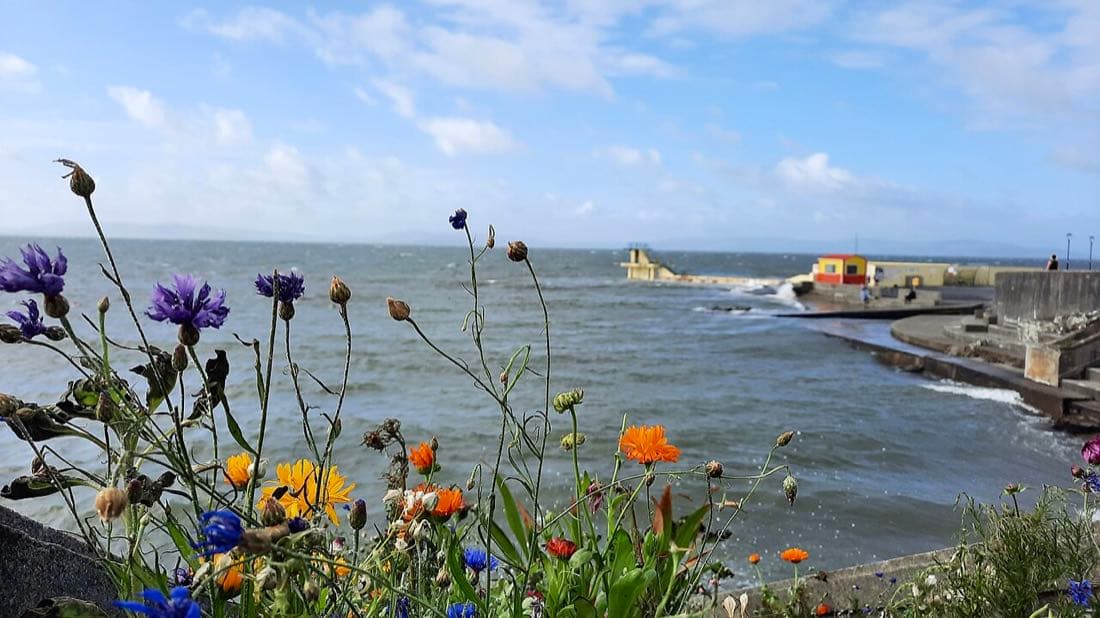
Eyre Square, Galway
Eyre Square, GalwayFoto: Gareth James, CC BY-SA 2.0, vía Wikimedia Commons

Plan the leaving

The hardest moment of playground hopping is leaving. Give a five-minute warning, then a two-minute one, and have the next thing ready: "now we're going to find the ducks" works far better than "time to go". Ending the whole walk at the best playground means you only have to leave once on a good note.

Have a rainy-day backup

Playgrounds get slippery and empty when it rains. Keep an indoor backup on the route, such as a library, a museum with a family area or a café with space for children, so a shower doesn't end the outing.

Peahen in Marlay Park, Dublin
Peahen in Marlay Park, DublinFoto: Barrowbob, CC BY-SA 4.0, vía Wikimedia Commons

Dublin through the year

Dublin averages 14 rainy days in Oct and highs of about 14°C. The driest month is usually Apr.

07.5158°9°10°12°15°18°19°19°17°14°11°10°JanFebMarAprMayJunJulAugSepOctNovDec

Days with 1 mm of rain or moreAverage high (°C)

Show the numbers
MonthRainy daysRainAverage highSunshineSunset
Jan1363 mm8°C4.1 h/day16:34
Feb1366 mm9°C5.4 h/day17:33
Mar1580 mm10°C7.1 h/day18:27
Apr1263 mm12°C9.2 h/day20:23
May1365 mm15°C11 h/day21:16
Jun1372 mm18°C11.4 h/day21:54
Jul1579 mm19°C10.1 h/day21:47
Aug1382 mm19°C9.7 h/day20:56
Sep1383 mm17°C8.2 h/day19:44
Oct1488 mm14°C6.2 h/day18:32
Nov1387 mm11°C4.5 h/day16:31
Dec1595 mm10°C3.3 h/day16:07
Averages for 2015–2024 from Open-Meteo historical weather (CC BY 4.0); sun times calculated for the 15th of each month, local time.