Chega ao teu destino passando pelas melhores paragens pelo caminho.

Caminha, pedala ou conduz passando pelos parques, atrações e locais para comer mais bem avaliados. Grátis e sem registo.

Diz para onde vais e escolhe parques, atrações ou gastronomia. Recebes um percurso a pé, de bicicleta ou de carro pelos locais mais bem avaliados pelo caminho, com a previsão do tempo para a tua viagem, pronto a abrir no Google Maps. Grátis e sem registo.

Planeia o teu percurso

Começa com um toque ou escreve dois locais.

Boa altura

14:00 · 15°C · seco

ou escolhe a tua viagem

Qual é o estilo?
Como vais até lá?
As minhas paragens e filtros
Detour tolerance
Tipos de locais incluídos
Guardado neste dispositivo para os teus próximos percursos.
  1. Partida · Covent Garden
  2. Paragem 1 · Somerset House
  3. Paragem 2 · St Paul's Cathedral
  4. Paragem 3 · The Monument
  5. Chegada · Tower of London

Todas as paragens têm 4,5★ ou mais, além da probabilidade de chuva e da melhor hora para sair. Experimenta este percurso →

Rivers and big landmarks make it easier to find your way around.

Atrações Dublin, Irlanda 3 min de leitura

Your first day in a new city: how to explore on foot

Rivers and big landmarks make it easier to find your way around.Foto: The wub, CC BY-SA 4.0, via Wikimedia Commons

The first day in a new city can be overwhelming. There's a long list of things you "should" see, a map full of unfamiliar names and only so many hours of daylight. One of the best ways to get your bearings is simply to walk, with a loose plan and room for surprises. Here's how to make that first day count.

Mapa de leitura · Locais neste guia

Explora os locais desta história

Seleciona qualquer ponto de interesse da narrativa para o veres no mapa complementar ou adicionares a uma caminhada.

Paragem 1 · River Liffey · Orientation point

Ha'penny Bridge

Start at the river to anchor north and south in your head on day one.

Start with a loop, not a list

Instead of rushing between headline attractions, plan a loop of two to three hours that starts and ends at your accommodation. Include one or two must-sees, but let the route connect them through neighbourhoods rather than taking the shortest path. You'll learn how the city fits together, which areas feel lively and where you might want to come back to eat.

Find your landmarks

Pick a few big reference points early on: a river, a hill, a tall tower or a main square. Once you know where they are relative to where you're staying, the city becomes much easier to navigate and you'll rely less on your phone. Rivers are especially handy because they tell you which side of town you're on.

Practical tip: take a photo of a street sign or landmark near your accommodation. If your battery runs low later, you can show it to a taxi driver or use it to ask for directions.

Mix your vibes

A good first-day loop has variety. Try a Sightseer stretch through the old centre, a Greener break in a park and a Gastro stop for lunch. You can plan each leg separately in Joyride AI: plan the first leg with one vibe, then plan the next from where you finished with another.

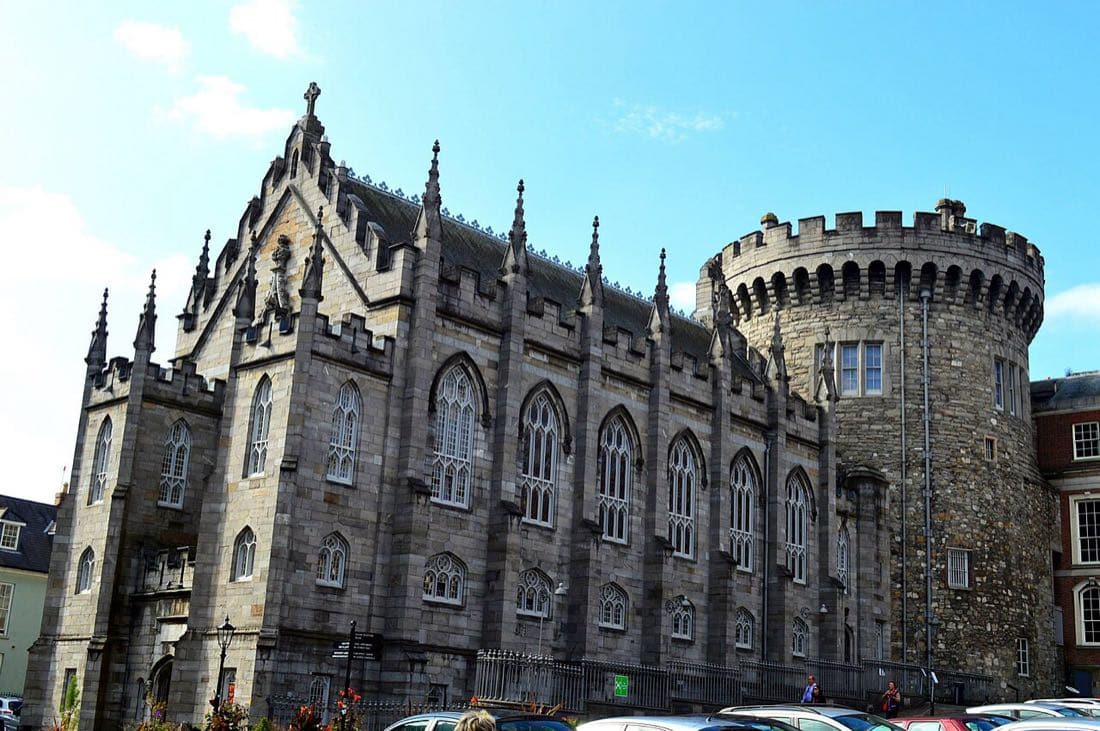
Dublin Dublin Castle
Dublin Dublin CastleFoto: Jowaria, CC BY-SA 4.0, via Wikimedia Commons

A first day in Dublin

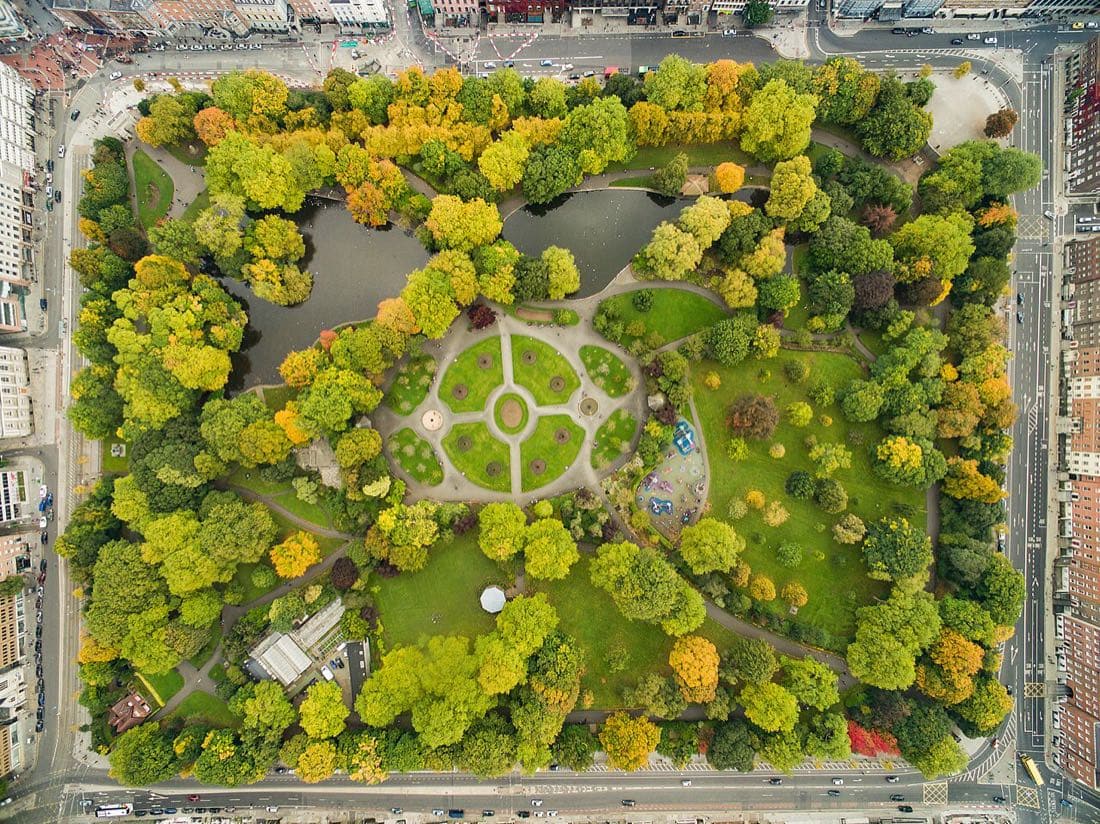
A simple loop could start at O'Connell Bridge, head west along the Liffey quays to the Ha'penny Bridge, then cut through Temple Bar to Dublin Castle and Christ Church Cathedral. From there, wander the streets around South Great George's Street for lunch, then finish with a stroll through St Stephen's Green and down Grafton Street. It's all walkable and gives you the river, the medieval quarter and the Georgian south side in one afternoon.

Pace yourself

It's easy to overdo it on day one, especially after travelling. Plan breaks every hour or so, carry water and wear shoes you've already broken in, because a long day in new shoes is a recipe for blisters. If you're jet-lagged, a gentle walk in daylight can help you adjust, but don't schedule anything you can't skip.

Dublin Stephen's Green 44 edit
Dublin Stephen's Green 44 editFoto: Dronepicr (edited by King of Hearts ) Edit corrects CA and sharpens image, CC BY 3.0, via Wikimedia Commons

Ask locals, but ask well

Staff in cafés, bookshops and independent shops often have great suggestions. Instead of asking "what should I see?", ask something specific, like "where would you go for a walk on a sunny afternoon?" or "where do you get coffee?" Specific questions get more honest, local answers.

Keep it safe and simple

Keep valuables out of sight, stay aware in crowded areas and keep your phone charged. Download offline maps in case your data connection is patchy, and know the local emergency number: 112 works across the EU, and 999 also works in Ireland and the UK.

Ha'penny Bridge at dusk
Ha'penny Bridge at duskFoto: EWilson (Volunteer), CC BY-SA 3.0, via Wikimedia Commons

Note what you want to revisit

By the end of day one you'll have spotted places to come back to: a restaurant with a queue, a museum you walked past or a park you only saw from the gate. Save them as you go. Joyride AI lets you save routes on your device, so you can reopen them later in the trip.

Dublin through the year

Dublin averages 14 rainy days in Oct and highs of about 14°C. The driest month is usually Apr.

07.5158°9°10°12°15°18°19°19°17°14°11°10°JanFebMarAprMayJunJulAugSepOctNovDec

Days with 1 mm of rain or moreAverage high (°C)

Show the numbers
MonthRainy daysRainAverage highSunshineSunset
Jan1363 mm8°C4.1 h/day16:34
Feb1366 mm9°C5.4 h/day17:33
Mar1580 mm10°C7.1 h/day18:27
Apr1263 mm12°C9.2 h/day20:23
May1365 mm15°C11 h/day21:16
Jun1372 mm18°C11.4 h/day21:54
Jul1579 mm19°C10.1 h/day21:47
Aug1382 mm19°C9.7 h/day20:56
Sep1383 mm17°C8.2 h/day19:44
Oct1488 mm14°C6.2 h/day18:32
Nov1387 mm11°C4.5 h/day16:31
Dec1595 mm10°C3.3 h/day16:07
Averages for 2015–2024 from Open-Meteo historical weather (CC BY 4.0); sun times calculated for the 15th of each month, local time.