Ans Ziel kommen – über die schönsten Zwischenstopps unterwegs.
Zu Fuß, mit dem Rad oder mit dem Auto vorbei an bestbewerteten Parks, Sehenswürdigkeiten und Cafés. Kostenlos, ohne Anmeldung.
Geben Sie Ihr Ziel ein und wählen Sie Parks, Sehenswürdigkeiten oder gutes Essen. Sie erhalten eine Fuß-, Rad- oder Autoroute über die bestbewerteten Orte entlang des Weges – inklusive Wettervorhersage und direkt bereit für Google Maps. Kostenlos, ohne Anmeldung.
Sie sind offline. Gespeicherte Routen und Reiseguides sind weiterhin verfügbar; die Live-Routenplanung steht wieder bereit, sobald Sie verbunden sind.
Planen Sie Ihre Route
Starten Sie mit einem Tippen oder geben Sie zwei Orte ein.
Melden Sie sich mit Google an, um Ihre gespeicherten Routen, letzten Touren und Einstellungen zu sichern.
G
Synced
Gespeichert
0
Zuletzt
0
Abgeschlossen
0
Entdeckt
0 km
Gespeicherte Routen
Noch keine gespeicherten Routen. Planen Sie eine Route und tippen Sie auf Speichern.
Letzte Touren
Hier erscheinen Ihre geplanten Touren. Tippen Sie eine an, um sie erneut zu planen.
Gespeicherte Guides & fertige Routen
Tippen Sie bei einem beliebigen Reiseguide oder einer fertigen Route auf Guide speichern oder Route speichern, um sie in Ihrer persönlichen Sammlung zu sichern.
Gelaufene & abgeschlossene Routen
Privacy & data portability
Your routes and bookmarks stay on your device unless you sign in to sync.
Download a portable JSON backup of your saved routes, recent history and bookmarks anytime, or clear all local data on this browser.
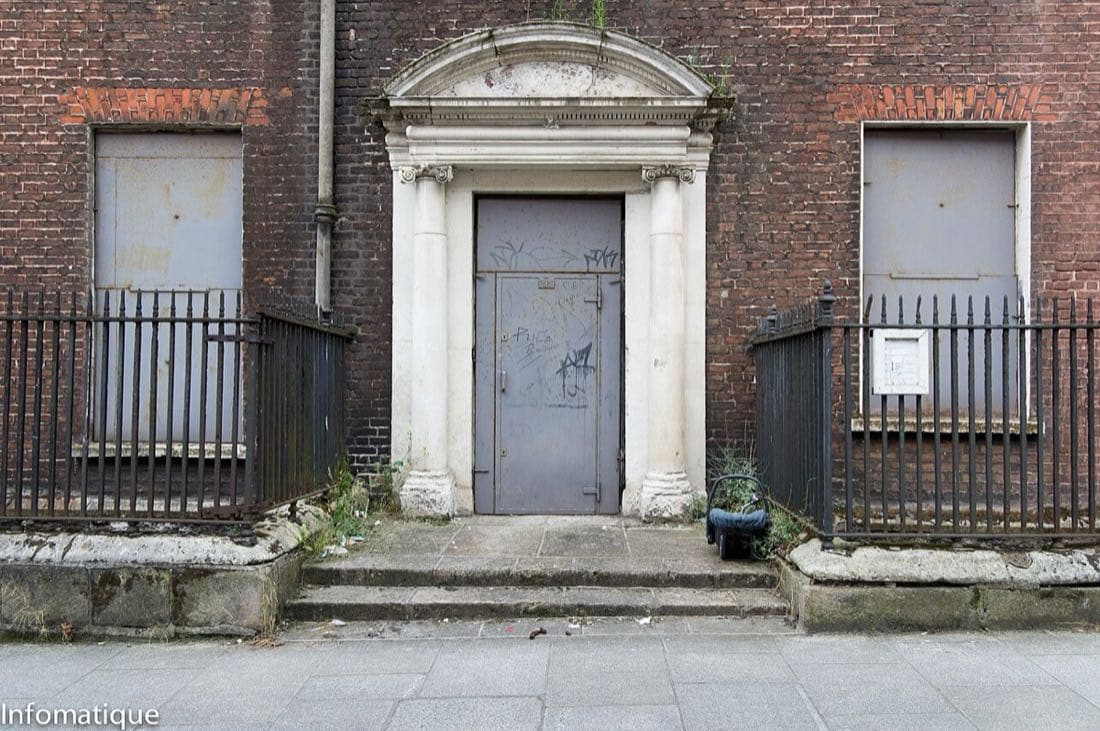
One street over from the main road is often where a city's character lives.Foto: William Murphy, CC BY-SA 2.0, via Wikimedia Commons
Most of us walk the same streets every day without really seeing them. The fastest route is rarely the most interesting one, and the difference is often only a block or two. A city's character tends to live in the places traffic planners ignore: side streets, laneways, courtyards, small churches, old shopfronts and the odd bit of street art tucked behind a car park. This guide covers simple habits that turn a routine walk into a small discovery, plus a worked example you can copy on your own commute.
Story-Begleiter · Orte in diesem Guide
Entdecken Sie die Orte in dieser Geschichte
Wählen Sie einen interessanten Ort aus dem Text aus, um ihn auf der Begleitkarte anzusehen oder zu einem Spaziergang hinzuzufügen.
Main roads are built to move traffic. They're wide and loud, and they're lined with chains that look the same in every city. Parallel side streets are where you find independent shops, murals, old shopfronts and quiet squares. On a map, look for the narrower street running alongside your usual route. In a compact city centre it usually adds less than two minutes, because you're still heading in the same direction. A good rule: if two streets run parallel and one of them has a bus lane, walk the other one.
2. Follow the ratings, not the size
Famous landmarks earn their reputation, but they're also where the queues and crowds are. Smaller places with strong ratings are often more rewarding on an ordinary weekday. When you scan a map, compare two numbers: the star rating and the number of reviews. A small chapel or courtyard with 4.7 stars from a few hundred reviews has been tested by plenty of people, and nearly all of them liked it. A 5.0 from six reviews tells you very little.
Joyride AI weighs both numbers for this reason. We only consider places rated 3.8 or higher, then favour those with more reviews, so one enthusiastic friend of the owner can't push a place to the top.
Quick filter: search for "museum", "church", "library" or "garden" near your route rather than "attractions". Generic categories surface smaller, quieter places that rarely make the top-ten lists.
3. Look up
Architecture changes above the ground floor. Shopfronts get replaced every few years, but upper storeys often keep their original brickwork, carved lettering, iron balconies and old painted adverts, sometimes called ghost signs. Next time you stop at a crossing, look at the first-floor windows rather than the traffic light. You'll start noticing dates carved into stone, the names of long-gone businesses and the odd gargoyle.
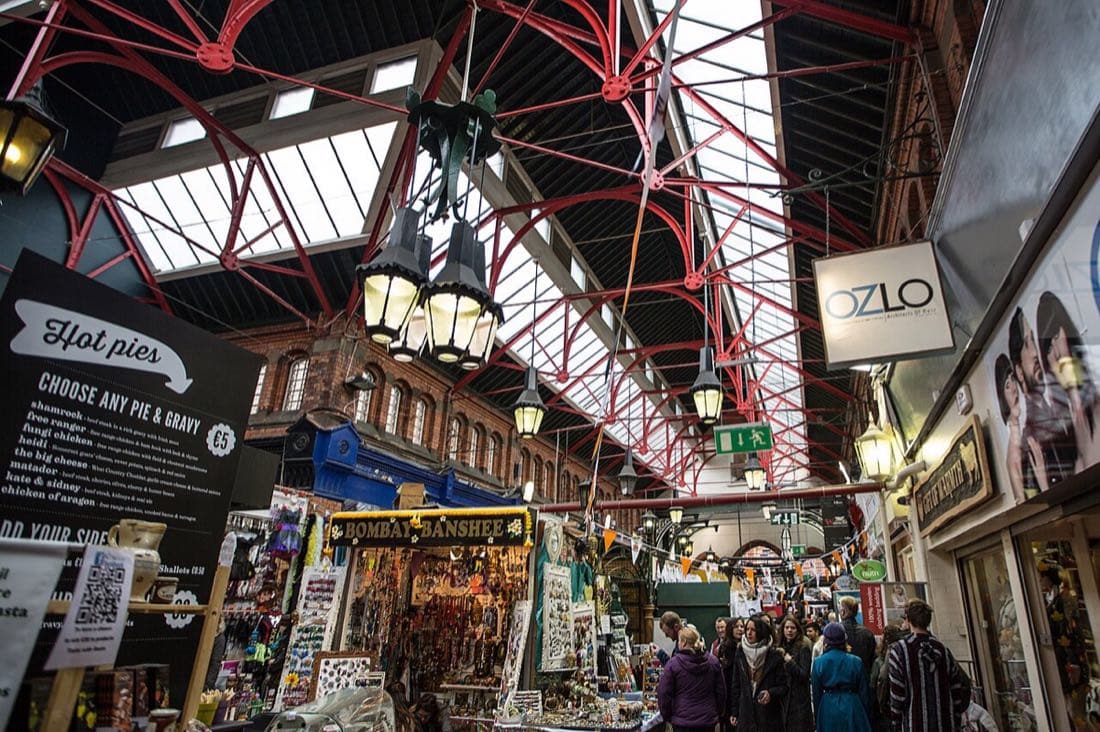
Many of the best city spaces are semi-hidden: a public garden behind a row of buildings, a covered arcade, a library reading room, a university courtyard or a market hall. Libraries, churches and civic buildings are often free to enter and quiet enough for a five-minute pause. Always check opening times, respect services and private events, and stay out of anywhere marked private.
5. Change the time, not just the route
The same street feels completely different at 8am and at sunset. Early mornings bring bakeries opening and empty squares that are perfect for photos. Golden hour, the hour or so before sunset, puts warm, low light on façades and water. Walk your usual route at a different time of day and you'll often spot details you've walked past for years.
We're based on Bolton Street in Dublin 1, so here's a route close to home. The direct way to St Stephen's Green heads down O'Connell Street and across O'Connell Bridge: quick, busy and dominated by buses. A Sightseer alternative turns onto Henrietta Street, one of the city's earliest Georgian streets, then follows Capel Street, with its independent shops and cafés, down to the river. Cross at Grattan Bridge for a view along the Liffey, head up past City Hall and Dublin Castle, then walk along South Great George's Street to the Green.
It takes only a little longer than the direct route, and every section has something worth looking at. That's the idea behind the planner: keep the direction, swap the boring parts.
6. Keep a simple log
Snap a photo or jot a line in a notebook when you find something you like. After a few weeks you'll have a personal map of favourite corners, and you'll start to see patterns. Maybe it's always the streets near the river, or the old market quarter, that reward a detour.
Hidden places are often hidden because they're small or residential. Keep your voice down in quiet courtyards, don't block doorways while taking photos, and if somewhere is busy, come back another time rather than squeezing in.
Referenz & Tools:
Dublin through the year
Dublin averages 14 rainy days in Oct and highs of about 14°C. The driest month is usually Apr.
Days with 1 mm of rain or moreAverage high (°C)
Show the numbers
Month
Rainy days
Rain
Average high
Sunshine
Sunset
Jan
13
63 mm
8°C
4.1 h/day
16:34
Feb
13
66 mm
9°C
5.4 h/day
17:33
Mar
15
80 mm
10°C
7.1 h/day
18:27
Apr
12
63 mm
12°C
9.2 h/day
20:23
May
13
65 mm
15°C
11 h/day
21:16
Jun
13
72 mm
18°C
11.4 h/day
21:54
Jul
15
79 mm
19°C
10.1 h/day
21:47
Aug
13
82 mm
19°C
9.7 h/day
20:56
Sep
13
83 mm
17°C
8.2 h/day
19:44
Oct
14
88 mm
14°C
6.2 h/day
18:32
Nov
13
87 mm
11°C
4.5 h/day
16:31
Dec
15
95 mm
10°C
3.3 h/day
16:07
Averages for 2015–2024 from Open-Meteo historical weather (CC BY 4.0); sun times calculated for the 15th of each month, local time.
Direkt auf diesem Gerät anhand von Uhrzeit, Wetter sowie Ihren letzten Routen und gelesenen Guides berechnet. Es werden keine Daten versendet. · · War das hilfreich? · · FeedbackDanke für Ihre Rückmeldung. · Feedback
Ihre Datenschutzeinstellungen
Wir verwenden Cookies für Statistiken und zur Anzeige von Werbung. Notwendige Speicherung (Ihre gespeicherten Routen und diese Auswahl) ist immer aktiv. Sie können Ihre Auswahl jederzeit über Cookie-Einstellungen in der Fußzeile ändern. Datenschutzerklärung